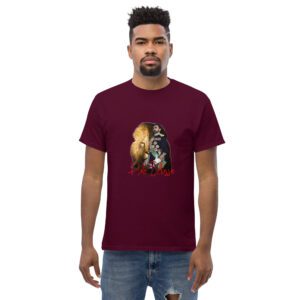

Walk through any Rasta yard, reggae festival or craft market in Jamaica and you’ll see him sooner or later: a crowned lion, often holding a staff, painted in red, gold and green. The Lion of Judah is probably the most recognizable image in Rastafari, and it isn’t just decoration. It carries a mix of Bible, Ethiopian history and Black pride that explains a lot about the movement itself.
Where the lion comes from
The Bible
The image goes back to Genesis 49, where the dying Jacob blesses his sons and calls Judah “a lion’s whelp.” The tribe of Judah became the royal line of Israel, the line of David and Solomon. Much later, the Book of Revelation (5:5) speaks of “the Lion of the tribe of Judah” who has triumphed. Kingship, strength and a promised deliverer: those are the ideas the symbol carried long before Rastafari existed.
Ethiopia and Haile Selassie
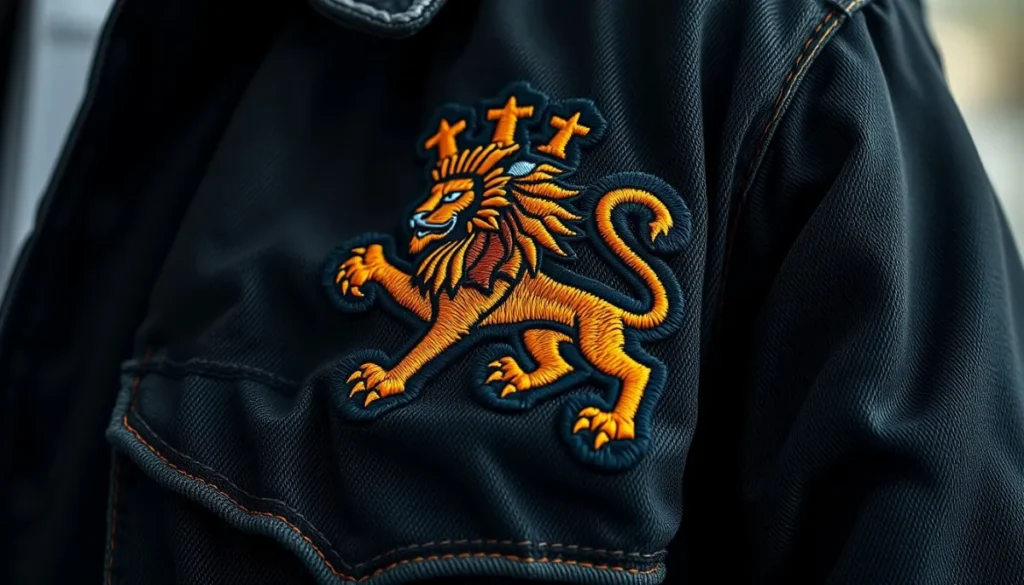
Ethiopia’s royal family claimed descent from King Solomon and the Queen of Sheba through their son Menelik I. Its emperors used the lion as their emblem, and when Ras Tafari Makonnen was crowned Haile Selassie I in November 1930, his official titles included “Conquering Lion of the Tribe of Judah.” The crowned lion holding a cross-topped staff appeared on Ethiopia’s flag, coins and stamps.
In Jamaica, the coronation landed at a time when Marcus Garvey had been telling Black people to look to Africa for a king. Preachers such as Leonard Howell saw Selassie as that king, and the Rastafari movement grew from there. Taking the lion as a symbol was a natural step: it tied the new faith to scripture, to an African throne and to the emperor himself.
A symbol of resistance
For people living under colonial rule, and then in the poverty that followed it, the lion meant something very direct. Here was an African king who traced his line back to Solomon, ruling a country that had beaten back an Italian invasion at Adwa in 1896. The lion said: Africa has its own royalty, and it doesn’t bow.
Early Rastas paid a price for their beliefs. They were harassed by the police, mocked for their locks and pushed to the edges of society. Wearing or painting the lion was a quiet way of saying they knew who they were. That’s still how many people use it today, on a tam, a chain or a T-shirt.
The spiritual side
For Rastafari, Haile Selassie is more than a historical figure, and the lion is his sign. It stands for divine authority, for Jah’s presence in the world and for the idea that the oppressed will be lifted up. When you hear the word “conquering” in reggae lyrics, this is usually what it refers to.
The lion also speaks about the individual. Its calm, upright posture is a reminder to carry yourself with dignity: to live righteously, stay strong in hard times and not let anyone take your sense of worth away. Many Rastas see that royalty as something that belongs to every person of African descent, not only to an emperor.

The lion in art, music and gatherings
At Nyabinghi gatherings, the drumming and chanting ceremonies at the heart of Rastafari worship, flags and banners with the lion are common. They mark the space as sacred and remind everyone why they’re there.
The lion is just as present outside religious events. You’ll find it on murals in Kingston, on album covers, on stage backdrops and on countless pieces of clothing. Artists draw it in many styles, from the formal Ethiopian version with crown and staff to looser, more modern takes, but the meaning stays the same: strength, pride and a link to Africa.
Why it still matters
The Lion of Judah has travelled a long way, from a blessing in Genesis to an emperor’s seal to a design on a hoodie in London or Toronto. Each step added a layer. Today it can mean faith, it can mean heritage, and for many people it simply means: I know where I come from. If you wear it, it’s worth knowing that story.
FAQ
What does the Lion of Judah mean in Rastafari?
It represents strength, royalty and Jah’s presence, and it is closely linked to Emperor Haile Selassie I, who used the title “Conquering Lion of the Tribe of Judah.”
Why is the lion often shown with a crown and a staff?
That is the version from the Ethiopian imperial flag and seals. The crown stands for kingship, and the staff topped with a cross shows the Christian faith of the Ethiopian monarchy.
Is the Lion of Judah only a religious symbol?
Not anymore. For Rastafari it is sacred, but many Jamaicans and people of the diaspora also wear it as a sign of African pride and cultural identity.
How does it connect Rastafarians to Africa?
Through Ethiopia. The lion links believers to an African kingdom that was never colonized, and to the idea of an African homeland and heritage worth honoring.
Related reading: In The Footsteps Of Haile Selassie – Exploring The Cultural Impact On Fashion · The Impact Of The Lion Of Judah Symbol On Jamaican Society · Waving Unity: Exploring the Rastafari Flag’s Impact on Identity
Shop the Jamaican look
Inspired by this story? Explore our Lion of Judah collection and Rastafari flag designs to wear your love for Jamaica every day.